
I’m sick of this! Talking to you is a complete waste of time!
When was the last time you left a conversation feeling unheard, frustrated, and annoyed?
For many people, this is a frequent event.
It happens at work, they bring it home, and they’re at war with most of their friends.
And for those who’d say, “It rarely happens to me”, is it because your communication skills prevent it, or because you’re avoiding the conversations that might go that way?
If you have experienced a few conversations that made you feel uncomfortable, I imagine they included phrases that sound like this:
“You never listen.”
“You never let me finish.”
“You always make me feel this way.”
These comments might feel true at the time. They might seem valid, but they can have horrible consequences in communication.
In practice, they almost completely eliminate the chance that your message will be received. No matter how important it might be.
Telling someone they always do bad things is the equivalent of starting a fight.
The other person naturally becomes defensive. Internally, they release stress hormones; their muscles tighten, their breathing becomes shallow, and their brain just doesn’t function at the same capacity as when they remain in a regulated state.
This physiological impact disables the recipient. It literally has the same effect on a person’s nervous system as a physical threat. And as polite as the recipient may try to be, they are no longer capable of fully listening. Certainly not in a way that creates a meaningful, open, collaborative exchange.
Thankfully, the reverse is equally true. The right phrases reliably do the opposite. They signal safety. They allow the other person to participate fully, and they make a good conversation possible. Not because they’re polite. But because they actually change what happens in the other person’s body and mind.
When you communicate safety, you enable a regulated state in the other person. Regulated means they are functioning properly. That they haven’t diverted their physiological resources to survival. Their minds are capable of rational thought and can process much more information.
The difference is that great.
The ‘right’ phrases aren’t magic. They don’t fix the underlying issue. But they definitely keep a conversation alive for long enough that you have the chance to get to an agreement.
And the difference between a conversation that ends with one or both people frustrated, confused, and angry, and one that ends with a new understanding can come down to just one sentence.
And it probably sounds like one of these:
“That sounds important to you. Can you tell me more.”
“I never understood how you felt about that before.”
“Why does that make you feel that way?”
“Can I just repeat what you said to see if I understand it properly.”
“(pause) … that’s interesting. Thanks for telling me how you feel.”
“I don’t agree with you, but that doesn’t mean you’re wrong.”
“I wish we would have spoken about this earlier.”
“Can I take some time to think about that before responding?”
“I appreciate you sharing such a difficult topic with me.”
“My opinion is slightly different. Can I share it with you?”
What I find most interesting and encouraging about this is that hard topics are so often avoided because of the conflict they provoke.
However, when you use the menu of constructive phrases above, you can just about navigate any topic without setting fire to the relationship.
Let me invite you to try something today …
Take the list I’ve shared above, find the one line that suits your personal vibe and circumstances, and go use it in a conversation you’ve been avoiding. Maybe start the conversation like this …
“Hey babe, can we talk about the other night. I want to hear how that made you feel. I may not have a response straight away but I’d really love to hear your perspective.”
Try it. Tell me what happens.
wayne@learnwellbooks.com
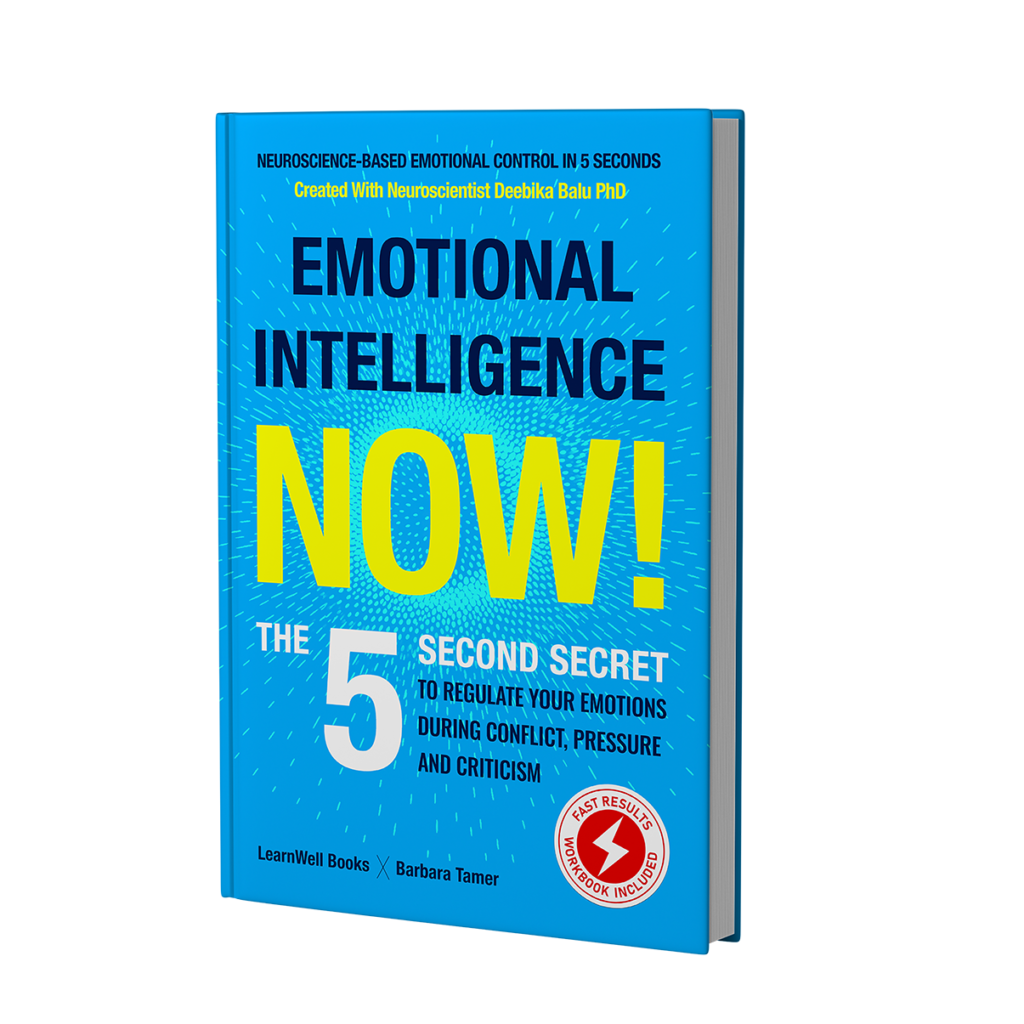
This Idea Is From
Our book on Emotional Intelligence.
Rebekah (Amazon Reviewer) says …
“If you’ve ever walked away from an argument or tough meeting thinking, “Why did I react like that?” this book is for you.”